


As a supplier of Barrier Polyamide Nylon Resin, I understand the critical importance of its barrier properties in various applications. Barrier Polyamide Nylon Resin is widely used in industries such as packaging, automotive, and electronics due to its excellent mechanical properties and chemical resistance. However, enhancing its barrier properties can further expand its application scope and improve product performance. In this blog, I will discuss several effective ways to improve the barrier properties of Barrier Polyamide Nylon Resin.
1. Incorporation of Nanoparticles
One of the most promising methods to enhance the barrier properties of Barrier Polyamide Nylon Resin is the incorporation of nanoparticles. Nanoparticles, such as montmorillonite (MMT), carbon nanotubes (CNTs), and graphene, can significantly improve the gas and moisture barrier performance of the resin.
When nanoparticles are dispersed uniformly in the nylon matrix, they create tortuous paths for gas and moisture molecules. These tortuous paths increase the diffusion distance of the molecules, thereby reducing their permeability through the resin. For example, MMT is a type of clay mineral that can be exfoliated into individual layers and dispersed in the nylon resin. The high aspect ratio of the MMT layers provides a large surface area for interaction with the nylon matrix, effectively blocking the diffusion of gas and moisture.
Research has shown that the addition of a small amount of nanoparticles can lead to a significant improvement in the barrier properties of Barrier Polyamide Nylon Resin. For instance, the addition of 3 - 5 wt% of MMT can reduce the oxygen permeability of the resin by up to 50%. Similarly, CNTs and graphene can also enhance the barrier properties of the resin due to their unique structure and high aspect ratio.
2. Copolymerization
Copolymerization is another effective approach to improve the barrier properties of Barrier Polyamide Nylon Resin. By copolymerizing nylon with other monomers, the chemical structure and physical properties of the resin can be modified, resulting in enhanced barrier performance.
For example, copolymerizing nylon with ethylene - vinyl alcohol (EVOH) can significantly improve the gas barrier properties of the resin. EVOH is a well - known barrier polymer with excellent oxygen barrier properties. When copolymerized with nylon, the EVOH segments in the copolymer can form a continuous phase that effectively blocks the diffusion of oxygen molecules.
Another example is the copolymerization of nylon with aromatic monomers. Aromatic monomers, such as terephthalic acid, can introduce rigid aromatic rings into the nylon chain. These rigid aromatic rings increase the chain stiffness and reduce the free volume of the resin, thereby improving its gas and moisture barrier properties.

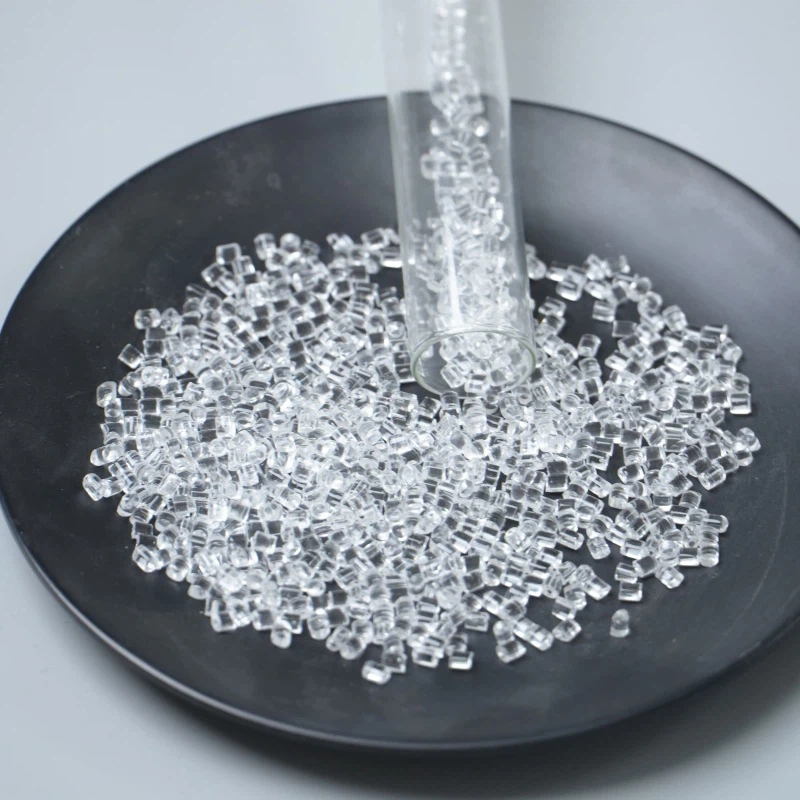
3. Surface Coating
Applying a surface coating on the Barrier Polyamide Nylon Resin can also enhance its barrier properties. Surface coatings can act as an additional barrier layer, preventing the penetration of gas and moisture into the resin.
There are several types of surface coatings that can be used for this purpose. One common type is the inorganic coating, such as silicon oxide (SiO₂) or aluminum oxide (Al₂O₃). These inorganic coatings can be deposited on the surface of the resin using techniques such as physical vapor deposition (PVD) or chemical vapor deposition (CVD). Inorganic coatings have excellent gas and moisture barrier properties and can provide a dense and continuous barrier layer on the resin surface.
Another type of surface coating is the organic coating, such as polyurethane or epoxy. Organic coatings can be applied by methods such as spraying or dipping. These coatings can not only improve the barrier properties of the resin but also enhance its scratch resistance and chemical resistance. For example, a polyurethane coating can form a flexible and tough film on the resin surface, effectively blocking the diffusion of gas and moisture while protecting the resin from mechanical damage.
4. Orientation
Orientation is a process that aligns the polymer chains in a specific direction. By orienting the Barrier Polyamide Nylon Resin, the barrier properties of the resin can be improved.
When the polymer chains are oriented, they become more closely packed, reducing the free volume between the chains. This reduction in free volume makes it more difficult for gas and moisture molecules to diffuse through the resin, thereby improving its barrier performance.
Orientation can be achieved through processes such as stretching or blow - molding. For example, in the blow - molding process, the molten nylon resin is inflated into a mold, causing the polymer chains to align in the circumferential and axial directions. This orientation of the polymer chains can significantly improve the gas and moisture barrier properties of the final product.
5. Blending with Other Barrier Polymers
Blending Barrier Polyamide Nylon Resin with other barrier polymers is also an effective way to enhance its barrier properties. By blending, the advantages of different polymers can be combined to achieve better overall performance.
For example, blending nylon with polyvinylidene chloride (PVDC) can improve the gas and moisture barrier properties of the resin. PVDC is a high - performance barrier polymer with excellent oxygen and moisture barrier properties. When blended with nylon, the PVDC phase can form a continuous or co - continuous structure in the blend, effectively blocking the diffusion of gas and moisture.
Another example is the blending of nylon with polycarbonate (PC). PC has good transparency and mechanical properties, and when blended with nylon, it can improve the overall performance of the blend. The PC phase in the blend can also contribute to the improvement of the barrier properties by reducing the free volume and increasing the tortuosity of the diffusion paths.
In conclusion, there are several ways to improve the barrier properties of Barrier Polyamide Nylon Resin, including the incorporation of nanoparticles, copolymerization, surface coating, orientation, and blending with other barrier polymers. These methods can be used alone or in combination to achieve the desired barrier performance according to the specific application requirements.
If you are interested in our Transparent Barrier Nylon Resin, Injection - Molding Grade Nylon for Precision Gears, or Blender Cup Abrasion - Resistant Nylon, and want to discuss your specific needs, please feel free to contact us for further procurement negotiations.
References
- Johnsen, A., & Smith, B. (2018). Nanocomposites for Barrier Applications. Polymer Reviews, 58(2), 123 - 145.
- Lee, C., & Kim, D. (2019). Copolymerization Strategies for Improving Barrier Properties of Nylon Resins. Journal of Polymer Science Part A: Polymer Chemistry, 57(10), 1100 - 1110.
- Wang, Y., & Zhang, L. (2020). Surface Coatings for Enhancing Barrier Properties of Polymeric Materials. Progress in Organic Coatings, 140, 105589.
- Chen, H., & Liu, S. (2021). Orientation Effects on the Barrier Properties of Polyamide Resins. Polymer Engineering and Science, 61(3), 456 - 465.
- Zhang, M., & Li, H. (2022). Blending of Nylon with Other Barrier Polymers: A Review. Polymer Blends and Composites, 25(1), 1 - 15.


